1 year, 4 seasons, 1 couple, 365 love scenes – imaginary or real?
Screenplay
Synopsis
365: Love Journal is an experimental feature screenplay that explores the evolution of a relationship through a single year.
On New Year’s Eve, in a crowded East Village bar, John—a struggling screenwriter who pays the bills as a plumber—meets Jane, a gifted Juilliard dance student. Their attraction is immediate.
John proposes an unusual experiment.
Instead of drifting through a year of casual relationships, he wants to experience every possible emotional and physical dimension of intimacy with one person. They will make love 365 times over the course of a year, documenting each encounter in a journal.
Jane laughs at the absurdity of the idea.
Then she says yes.
What begins as a playful challenge gradually transforms into something neither of them expected. As the seasons change, desire becomes ritual, ritual becomes performance, and performance slowly gives way to genuine vulnerability. The journal that was meant to document love begins to shape it.
The film unfolds through more than 365 numbered fragments—moments, memories, conversations, dreams, dances, arguments, fantasies, silences, and acts of tenderness. Together they form a mosaic of a relationship rather than a conventional narrative.

The Four Seasons
Winter
The Beginning
The first ninety-three encounters capture the intoxication of new love. Their attraction is spontaneous, playful, obsessive. John documents everything, convinced that love can somehow be understood through repetition.
Spring
Discovery
As intimacy deepens, the experiment expands beyond the bedroom. Their conversations turn philosophical. They explore identity, art, faith, memory, and what it means to truly know another person. Jane begins quietly reclaiming authorship of the story.
Summer
Disintegration
A journey to Los Angeles exposes ambition, jealousy, addiction, and temptation. The relationship fractures under the weight of performance and self-documentation. Unknown to John, Jane has begun recording the relationship from her own perspective through photographs and social media, creating an entirely different journal.
Autumn
Transcendence
Their final season takes them to India, where the search for spiritual meaning briefly dissolves the boundaries between love, ego, memory, and desire. Returning home, they must decide whether their relationship has become an experiment—or whether the experiment has become their relationship.
The story concludes with separation, reconciliation, a marriage proposal, and the possibility of new life—suggesting that love ultimately escapes every attempt to define, measure, or document it.
Themes
At its heart, 365: Love Journal asks a simple question:
Can love survive the moment we begin trying to capture it?
The film explores intimacy as performance, memory as fiction, and documentation as both preservation and destruction. In a culture obsessed with recording every experience, it asks whether the act of observing life inevitably changes it.
Rather than presenting sexuality as spectacle, the screenplay treats physical intimacy as another language—one through which two people negotiate trust, identity, vulnerability, and time.
The journal itself becomes a metaphor for cinema.
Every numbered scene is a fragment of memory, inviting the audience to assemble the emotional truth between the images.
⸻
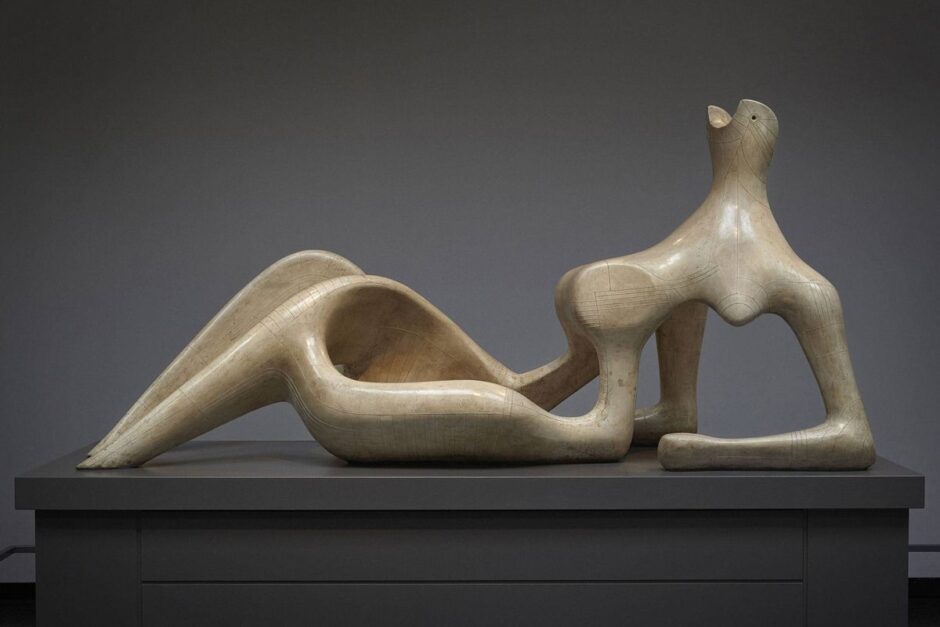
Body as Landscape
The visual language transforms the human body into cinematic landscape.
Extreme close-ups become mountains, deserts, oceans, clouds, skin becoming geography. The smallest gesture acquires epic scale.
Before filmmaking, I studied sculpture, and the work of Aristide Maillol, Auguste Rodin, Henry Moore, and Alberto Giacometti continues to influence how I think about the human figure—not as an object, but as emotional architecture.
The goal is never explicitness.
It is poetry.
The imagery should feel dreamlike, tactile, and hypnotic, moving freely between reality, memory, fantasy, dance, dreams, and imagination.
⸻
A Cinematic Experience
I imagine 365: Love Journal as a four-hour cinematic event presented in four seasonal chapters:
Winter • Spring • Summer • Autumn
Each chapter possesses its own visual rhythm and musical identity.
A continuous electronic score flows throughout the film, allowing scenes to dissolve into one another like memories. Time fractures. Moments repeat, overlap, disappear, and return. The audience experiences the relationship not chronologically, but emotionally.
The soundtrack itself becomes another narrator.
I envision collaborating with four different composers or DJs, each creating the musical language for one season.
⸻
An Immersive Premiere
The ideal premiere would be a live immersive presentation.
Projected across three synchronized screens, the audience would experience all four chapters with intermissions between seasons, accompanied by live musical performance.
The installation would then evolve into a touring event before being released as a feature film for theatrical exhibition and streaming.
Like the journal itself, every presentation becomes another performance of memory.
⸻
Director’s Statement
Love is often remembered in fragments.
Not entire conversations, but the way someone looked across a room.
A hand.
A laugh.
The smell of rain.
The first kiss.
The final goodbye.
365: Love Journal is an attempt to build a feature film entirely from those fragments.
It is less interested in the mechanics of a relationship than in the emotional archaeology of memory itself.
The film asks whether the most intimate moments of our lives can ever truly be documented—or whether they exist only in the stories we tell ourselves long afterward.
Ultimately, this is not a film about sex.
It is a film about two people trying to discover whether love can exist beyond performance, beyond memory, and beyond the impossible desire to hold onto time itself.