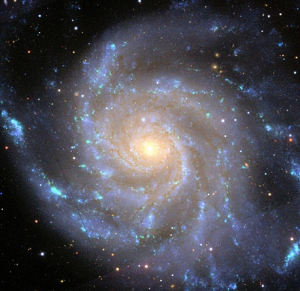
A BARDO IMMERSIVE MOVIE
A young love triangle in the life after death state.
Adam has a near-death experience, Julia is dead, Chloe was given a date drug.
Each character has their own individual Bardo experience.
Inspired by humanity’s oldest questions about the journey of consciousness after death, drawing from multiple spiritual traditions including Tibetan teachings on the Bardo, ancient Egyptian concepts of the soul’s journey, Hindu ideas of reincarnation, Kabbalistic notions of the soul’s evolution, and mystical Christian visions of the afterlife.
LOVE ETERNAL is an epic metaphysical love story exploring the mystery of consciousness beyond death.
Three souls become intertwined within a dreamlike liminal realm between life and death. One has died. One is undergoing a near-death experience. One drifts through an altered state of consciousness. As their memories merge and overlap, they discover they have encountered one another across many lifetimes in countless forms.
Designed as a hybrid live-action and AI-driven cinematic experience, LOVE ETERNAL is envisioned for IMAX and immersive large-format presentation, placing the audience inside a vast, overwhelming dreamscape where past, present, and future coexist.
The heart of it is the idea that souls keep finding one another across lifetimes, and that love may be one of the few things that survives death – a theme that exists in almost every spiritual tradition on Earth.
1. The Setup – Three Lives, One Threshold
The film opens with a ghostlike young woman, Julia (21), floating in a vast, luminous void—watching.
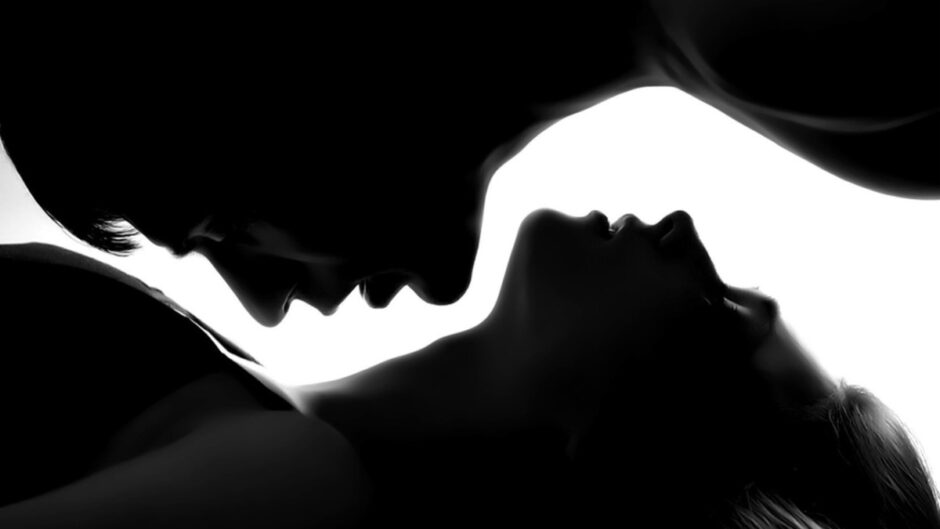
We cut to Adam (24), a gifted but emotionally restless VR designer in Los Angeles, obsessed with building immersive realities. Over a weekend trip to Las Vegas for a tech expo and music festival, Adam meets Chloe (22)—a fashion student secretly working as an escort. Their connection is immediate, sensual, and charged.
Unseen, Julia watches.
During a night of excess, Adam takes experience-enhancing drugs, overdoses, and suffers a heart attack. He is rushed to the hospital and placed on life support—clinically near death.
As Adam slips into a near-death state, he awakens in a surreal, shifting reality—the Bardo. There, he encounters Julia, who is revealed to be his former college love and wife—the love of his life who died three years earlier.
But the truth is deeper: Julia is not entering his experience—she has been there all along. She is truly dead, and through Adam’s coma, she is able to experience the living world again through his consciousness. Their perceptions merge. Everything Adam sees, she sees. Everything he feels, she feels.
As Adam struggles to understand where he is, Julia urges him to return to life—to wake up. But beneath that urgency lies a hidden intention.
Because Julia has brought Adam and Chloe together—for a reason.
2. The Bardo Journeys – Memory, Karma, and Connection
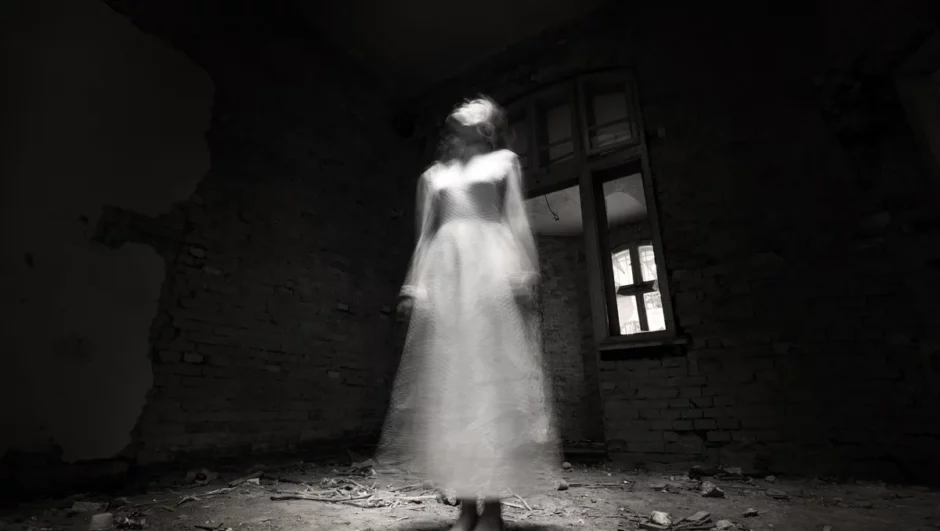
Through Adam’s near-death experience, we move fluidly between realities: dream states, drug hallucinations, memories, and moments of illumination where life and the Bardo intersect.
Adam relives his past—his childhood, his fractured family, and most importantly, his relationship with Julia: their love, their intellectual and spiritual bond, their travels, and the betrayal that broke them.
Julia experiences all of it with him—not as memory, but as presence.
At the same time, Adam’s Bardo journey becomes increasingly unstable—shifting from awe to terror. Guided and tormented by the shape-shifting Dr. Death, he encounters manifestations of his own psyche: guilt, desire, fear, and unresolved karma.
Unlike Adam, who resists and struggles, Julia understands this realm. She sees the patterns. She begins to recognize that karma is not fixed—it can be resolved, redirected, even transformed.
Adam ultimately turns back—his body revives. He wakes up in the hospital.
But Chloe rejects him, shaken by the experience. They separate.
Julia’s plan begins to unravel.
Desperate, she sets a second chain of events in motion: Chloe is drawn—through a date-drug experience—into her own altered state, slipping partially into the Bardo.
There, Julia and Chloe finally meet.
What begins as confrontation becomes something deeper: a reckoning. Through shared perception, they uncover their karmic ties—jealousy, desire, competition, and connection. They resolve what stands between them.
Now, all three are linked.
3. Julia’s Journey – Judgment, Time, and Rebirth
The final act belongs fully to Julia.
Her path through the Bardo intensifies into a true spiritual trial. She faces judgment—not from an external authority, but through the totality of her own life: her love for Adam, her attachment, her pain, her inability to let go.
The Bardo begins to close.
There is a ticking clock—a narrowing window in which rebirth is possible. If she misses it, she will be carried into another cycle, another life—losing Adam forever in this one.
She is confronted with a choice: release her attachment and move toward transcendence… or fight to return.
Julia chooses love.
But love here is no longer romantic—it is transformational and sacrificial.
She must alter the course of events in the living world—guiding Adam and Chloe toward each other, not for herself as a lover, but to create the conditions for her rebirth.
Her obstacles are immense:
- Adam’s emotional resistance and confusion
- Chloe’s fear and trauma
- The instability of the Bardo itself
- The pull of dissolution and oblivion
Through sheer will and awareness, Julia begins to shift karma—subtly influencing perception, connection, and choice.
Adam and Chloe are drawn back together—this time not through lust, but through something deeper, unresolved, and human.
As time runs out, Julia races toward the threshold of rebirth.
In a final convergence, the boundaries between life and Bardo dissolve. Julia must arrive at the precise moment of conception—or lose her chance forever.
She makes it.
The film closes with the suggestion of new life: Julia reborn as Adam and Chloe’s child—Jules.
Adam and Chloe, unaware of the full truth, feel something profound has shifted. A connection beyond explanation.
Love Eternal becomes not just a story of life after death, but of love transformed across forms—from lovers, to loss, to rebirth.
A love that refuses to end—only to change.
Immersive Large Screen Experience
Various teachings describe the Bardo as an overwhelming hallucinatory state, that is multi-dimensional, combining simultaneous levels of time, memory, space and realm.
The audience is often the consciousness of one who has died (subjective POV), but the character can also appear “watching”, so we can also become an objective POV – like watching one’s physical ghost of current age beside one’s image as a baby – even witnessing one’s own birth.
The past and the present reunite and become one. Memories merge and interact with current reality. It is a chance to combine several realities and time frames into a single shot or immersive experience, witnessing moments from one’s life play out all around as we, or the protagonist, interacts with the memories.
The experience is grounded by placing it largely in real settings with real people from the main character’s life – it is more about connecting death to life, reality to memory, rather than visiting otherworldly realms.
Adam’s experience is also colored by him being a designer of VR video games, enabling connections between his memories and the games he is working on.
Core Audience
Understanding death one can lead a richer more meaningful life – especially if there is still much left to experience – so we are aiming at younger audiences.
The central character is a designer of games – the story is about young love, childhood, school, college, relationship to one’s parents.
It is set in the world of tech start-ups, the Electric Daisy Music Carnival, Burning Man Festival, the outdoors – backpacking around the world, action sports and situations that would be fun for a young audience to enjoy as a large screen immersive and VR experience.